AOT Logo

Call 619.291.3700

Visit AOT on Facebook View my LinkedIn Profile Follow AOT on Twitter Subscribe to AOT\'s RSS Feed
  • Home
  • Business Consulting
    • Business Health CheckUp
    • Business Planning
    • Management Retreats
    • Marketing Strategy
    • Client Advisory Boards
    • Budgets and Profit Improvement Planning
  • On Target Program
    • Profit Planning Class
    • On Target Business Success Program
  • Coaching
    • Customized Coaching Options
    • Coaching Skills Training
  • Training
    • Phone Right Communications Training
    • Effective Financial Management
    • Towards Awesome Service
    • Coaching Skills for Managers
  • Speaking
  • Blog
  • About Us
    • Testimonials
  • Contact Us

Archive for Sales

How many leads do you need to hit your sales goals?

Posted by Linnea Blair on
 08/06/2019

How many leads do you need to hit your sales goals?

I’m sure as a business owner and salesperson you know what your sales goals are for the year. You probably have your goals further broken down by quarter and by month.

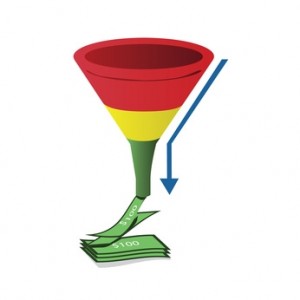
But do you know how many leads or inquiries you need to sell that much? It often surprises me to find out that business owners haven’t calculated the leads they need in each month to hit their goals. Incoming leads or opportunities are a leading indicator that you will hit your sales goals.

Since I love crunching numbers, I’ve developed a formula for that. First you need to know a few things, and if you don’t, you’ll have to estimate for now until you collect more data.

Here are critical numbers to know:

  1. Average size job
  2. Close Ratio (Sales to Bid/Proposal %)
  3. Qualifying Ratio (Bid/Proposal to Lead %)

Here’s an example. Let’s say your sales goal for the month is $50,000. Let’s further assume the following:

  • Average size job is $5,000
  • Close ratio is 45%
  • Qualifying ratio is 90%

Leads needed for the month are: 25 ($50,000 divided by $5,000 divided by .45 divided by .9). So, in this example to be on track, you should be getting about 6 leads or opportunities per week.

Look at your own statistics. If you are getting the leads you calculate you need, you should be on track to hit your goals.

If you are receiving the right number of leads, but not hitting your sales goals, then something is off. Maybe your marketing isn’t reaching your best target customer, or you could be doing a better job of qualifying or closing.

If you aren’t getting the number of leads you need, then you need to change or increase your marketing efforts.

I hope this simple calculation will help you to increase your success in achieving your sales goals.
Categories : Uncategorized
Tags : Marketing, Sales

The Solution to Healthier Sales

Posted by Linnea Blair on
 07/03/2011

Good times and busy seasons always feel like they will last forever. However, there always times when clients are harder to find. The global financial crisis and its consequences showed that when an economy sours, firms without robust processes tend to founder. Fewer leads and falling sales are typical signs.

Sales PipelineCompanies can reduce the effect of external conditions by trying to determine where future sales will come from and how to get them. This process is called building a sales pipeline because it lets you track a potential client from the first point of contact through to a completed sale and beyond.

A well developed sales pipeline will define how many sales you aim to close in a month, quarter or year. Looking back at your track record you can then make forecasts about the number of sales and the following revenue and profit you will generate. In other words, it helps you measure firm performance.

A sales pipeline will reveal interesting facts about the skills of your sales team. A salesperson might be great at finding new customers but terrible at closing the sale; another might take twice as long to close as his or her colleagues. Salespeople can undergo training to help them improve problem areas or you could hire someone with complementary skills to your existing team.

A pipeline can also enforce discipline in the sales process and find more sales from existing clients, which is often easier than acquiring new ones. Analyzing the reasons for losing a sale can help you understand which questions will lead to a win.

Studying sales as they progress through a pipeline will show that not all sales are equal. Larger deals usually take more effort to win than smaller ones, and knowing the cost of making a sale is important in finding out how much profit you made in each sale.

The more information your sales pipeline delivers, the more tightly you can focus on chasing the most profitable sales. Then you can hand your sales team a detailed picture of your ideal client, where to find them and how to convince them to say yes.

Categories : Uncategorized
Tags : Closing Ratio, Monitoring, Sales, Sales Pipeline, Sellling

Don’t Freeze Making Cold Calls

Posted by Linnea Blair on
 09/13/2006

Cold calling is a widely used method of prospecting for new customers. Any business owner with a telephone knows that two or three times a day someone they have never met will contact their company with some kind of proposal like seeking an opportunity to quote against an existing supplier.

It’s not easy to make cold calls and those who have the job of making them often feel uncomfortable about their assignment. But there are ways to ‘warm up’ to the task so that you will feel more relaxed and in control and make the whole process a lot less scary.

1. Send an advance notice

A cold call is usually an interruption for the person on the other end of the phone. Understanding their needs is one of the most important parts of cold calling. You’ll only have a brief period of time to get your ‘foot in the door’ before the prospect begins to resent the intrusion, and making the most of that small window is essential.

Calling completely cold is probably the biggest mistake cold callers make. Arrange a mailing so that your prospect has a day or two notice that you’ll be contacting them. Send them a simple brochure or leaflet – nothing too long or flashy – that outlines the basics of your offering and promises that you’ll be in touch shortly. They may not be exactly looking forward to your call, but at least they’ll have seen your name and product and know where the conversation is going. This also allows you to introduce yourself by telling them you sent them a communication and inquire if they had received it.

2. Know something about your prospect
The more you know about the prospect’s business the more confident you can feel about asking the right questions and giving them the right answers to their questions since you’ll already have a rough idea of how you might be able to help them. Look for their advertisement in the Yellow Pages, and if they have a website go through it carefully.

3. Know what you want to say
This doesn’t mean reciting a script word-for-word. Nothing sounds worse or is more likely to get a “Sorry, not interested” response. But if you work out what you’re going to say before you make the call you’ll be more confident about making it. You need to introduce yourself, explain the purpose of your call, and get through the ‘screener’ to reach the decision maker. Once you’ve got the right person the real call begins. Developing a checklist to track things during the call is a good idea to ensure you cover all the main things you want to get across.

4. Talk in terms of helping rather than selling
Be natural and friendly. Explain briefly what you do and end with a statement that you’d like to see whether you might be able to help them. Explain that you’d really like to meet them and that there’d be no obligation on their part; you just want to explore the possibilities for satisfying a need in their business. If you’re sincere and don’t start selling something right away you’ll have a much better chance of turning the call into a conversation. All you want is a meeting, not a sale.

5. Have an offer ready

Because you’re already taking up their time, and want to take up even more of it, find a way to make it worth their while. You might say, “Look, I’ll set aside whatever time suits you on Thursday morning and I’ll take you out for breakfast or a coffee, whichever suits you best.”

6. Rehearse your call lines
Rehearse with someone on the phone who can answer your call and take the role of your prospect. As they come back with a variety of responses you’ll get the feel for handling them. The person you want to speak with may be out, may be busy, or may just not want to talk with you. Success in cold calling is frequently the result of the way you convince the person screening the calls more than anything else.

Rejections will happen and they’re nothing personal so don’t take them that way. Some people may be rude or hang up on you – it’s just part of cold calling. However, your call may remind them to take another look at the leaflet you sent them and they might call you back later. You can never tell.

Just remember to be yourself. If you believe in what you do and that you can really help your prospect’s business, there’s every reason to be confident that you’ll win through with the prospect and eventually get the opportunity to present your product to them.

Information in this article is sourced from RAN ONE, Inc

Categories : Marketing
Tags : Cold Calling, Cold Calls, Marketing, Sales, Selling
Sign Up for our Monthly Newsletter

Email:

Recent Posts

  • Business Goals…what Business Goals?
  • Best Time to Make a Business Budget?
  • Budget your vacation?
  • Know Your Numbers – What does it mean to you?
  • Best Business Practice Guide

Categories

  • 6 Advisors
  • Business Operations
  • Business Planning
  • Business Strategy
  • Construction Law
  • Customer Service Systems
  • Employees
  • Employment Law
  • Events
  • Financial Management
  • Human Resources
  • Internet Marketing
  • Leadership
  • Marketing
  • Member Notices
  • On Target Program
  • Personal Growth
  • Productivity
  • Productivity Tips
  • QuickBooks Tips
  • Relationship Marketing
  • Social Media Marketing
  • Uncategorized
  • What's Next?

Archives

  • January 2024
  • November 2021
  • October 2021
  • October 2020
  • January 2020
  • November 2019
  • October 2019
  • September 2019
  • August 2019
  • November 2016
  • August 2016
  • November 2015
  • July 2015
  • June 2015
  • May 2015
  • November 2014
  • August 2014
  • March 2014
  • January 2014
  • December 2013
  • July 2013
  • February 2013
  • January 2013
  • September 2012
  • August 2012
  • March 2012
  • February 2012
  • January 2012
  • December 2011
  • October 2011
  • September 2011
  • July 2011
  • June 2011
  • May 2011
  • April 2011
  • February 2011
  • January 2011
  • December 2010
  • November 2010
  • October 2010
  • September 2010
  • August 2010
  • July 2010
  • June 2010
  • May 2010
  • April 2010
  • March 2010
  • February 2010
  • October 2009
  • July 2009
  • June 2009
  • May 2009
  • March 2009
  • February 2009
  • December 2008
  • November 2008
  • October 2008
  • September 2008
  • August 2008
  • July 2008
  • June 2008
  • December 2007
  • September 2007
  • August 2007
  • November 2006
  • October 2006
  • September 2006
  • August 2006
  • July 2006
  • February 2006
  • November 2005
  • October 2005
  • September 2005
  • August 2005
  • July 2005
  • June 2005

Tags

6 Advisors 90 Day Goals Accounts Receivables Action Plan ADA Advisors On Target Appreciation Bartering Best Business Practices Blog Blogging Borrowing Brand Budget Busget Business Business Finance Business Health Checkup Business Law Business Mistakes Business Operations Business Plan Business Planning Business Strategy Business Valuation Cash Flow Cash Management Charitable Christopher Olmsted Client Deposits Client Retainers Closing Ratio Coaching Cold Calling Cold Calls Collections Communication Company Culture Computers Computer Virus Construction Law Conversion Customer Communications Customer Loyalty Customer Service Delegating Easy Marketing Economy EEOC Email Marketing Email Newsletter Employee Development Employee Expenses Employee Fraud Employee Morale Employee Retention Employees Employment Employment Law Entrepreneur Exit Strategy Finance Financial Management Financial Statements Focus Forecasting Goals Hiring Human Resources Internal Fraud Internet Explorer Internet Marketing Invoices iPad IT Key Performance Indicators KPIs Lawsuit Leadership Leads Litigation Marketing Marketing Strategy Mechanic's Lien Mobile Monitoring Networking Niche Market Non-profit Online Marketing Online Strategy On Target Program Owner Compensation painting contractors Payroll Processing Payroll Service People Development Personal Growth Personnel Management Politics Pomodoro Positive Thinking Productivity Productivity Tips Profit Profit & Loss Profit Plan Project Management Pro Painting Net Quarterly Plan QuickBooks Tips Relationship Marketing Relationships Marketing Retention Retirement Sales Sales Pipeline Sales Receipts search engine marketing Selling Sellling SEO Sexual Harassment Training Small Business Small Business Coaching Small Business Consulting Social Media Strategic Planning SWOT Analysis Team Team Training Teamwork Technology Time Management Trading Services Twitter Webinar Website WordPress
NetworkedBlogs
Blog:
Advisors On Target Business Success Blog
Topics:
business strategy, marketing, internet marketing
 
Follow my blog

Copyright © 2003-2019
Advisors On Target LLC   |   3940 Hortensia Street, #201   |   San Diego, CA 92110  |  619-291-3700

Contact Us
Privacy Policy