AOT Logo

Call 619.291.3700

Visit AOT on Facebook View my LinkedIn Profile Follow AOT on Twitter Subscribe to AOT\'s RSS Feed
  • Home
  • Business Consulting
    • Business Health CheckUp
    • Business Planning
    • Management Retreats
    • Marketing Strategy
    • Client Advisory Boards
    • Budgets and Profit Improvement Planning
  • On Target Program
    • Profit Planning Class
    • On Target Business Success Program
  • Coaching
    • Customized Coaching Options
    • Coaching Skills Training
  • Training
    • Phone Right Communications Training
    • Effective Financial Management
    • Towards Awesome Service
    • Coaching Skills for Managers
  • Speaking
  • Blog
  • About Us
    • Testimonials
  • Contact Us

Archive for Marketing

Planning for Growth? Make sure your Marketing Strategies are really working!

Posted by Linnea Blair on
 01/31/2020

As I review many profit plans/budgets with my clients this year, it is evident that most are planning for some growth and many are planning for significant growth. Of course, there are many factors that go into achieving that growth: Effective marketing and sales to bring in additional work, enough of the right people to produce the work, appropriate capitalization, and the strategies, systems and monitoring to ensure that the additional work is profitable.

One of the Four Ways to Grow your Business, simply put, is to get more clients. To do that you usually need to increase or improve the effectiveness of your marketing efforts or improve your sales close rate – or both.

Do your advertising and marketing efforts really boost sales? Are you getting the best returns from your marketing budget by targeting your media and your audience? Or are you just taking a shotgun approach and hoping for the best?

If you don’t have a system to measure the results of your advertising, then you’re probably relying heavily on guesswork. And you probably aren’t getting the best bang for your marketing buck. You’ll only know for certain if you measure and track the results of your marketing strategies.

Remember the adage ‘What you can measure you can manage’. If you can measure the results of your marketing, you can assess just where advertising is really boosting your sales – that is, where you earn multiples of each marketing dollar you spend.

You may object that it takes too much time and effort. There is some justification in that view. You run a small business, and you may not have a lot of time or resources to operate complicated measurement or tracking program. But fortunately, there are some simple techniques for assessing your advertising return on investment.


These vary according to whether you measure advertising that has been focused on a particular service and designed to get a sale in the short term, or whether it was designed to work long term, influencing buyer attitudes towards your business and building a certain image.
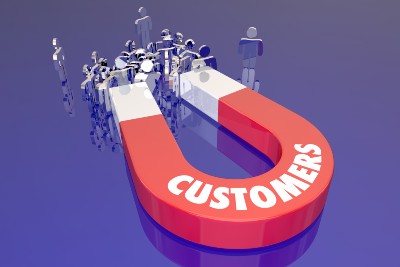

You can use coupons, postcards or ads that correspond with special offers and then test the response. You can test ad response through hidden offers of the type, ‘Mention this advertisement and get 15 percent off’, or ‘Call this number for more information.’ Or you can use trackable link or phone number in your offer. If you record the number of inquiries, you can get some idea of how successful the ad has been. You can also run two versions of the same offer through a ‘split-test’. Each version would carry a slightly different offer and you could record which one got the most responses. You can also keep records of sales of advertised and related items in the days or weeks after an advertisement.


Measuring attitude marketing takes a little more stamina. You will be tracking many different strategies for marketing and brand awareness including not only print or other media advertising, and direct mail, but your signs, website and internet marketing, networking and any other methods you are using to promote your company.


You will need to track the results of a number of marketing campaigns over a period of months by keeping up-to-date records on a monthly basis to track the number of leads, bids, sales as well as the dollar value of the sales from each of your marketing strategies. I use a Sales Tracking Template built in Excel that I developed, or you may be able to get the information you need from a CRM (assuming you are using it effectively). This will allow you to compare sales year to year and judge the individual and cumulative effect of your marketing campaigns.

Start tracking your marketing success now for this year, and you will be able to fine-tune your plan going forward to use your marketing dollars wisely and increase your return on investment.


Categories : Marketing
Tags : Business Strategy, Marketing, Marketing Strategy, Small Business

Build Good Relationships with a Customer Communications Plan

Posted by Linnea Blair on
 09/17/2019

There is gold in your contact database if only you take the time to mine it. Every business owner has a list of customers who love your service, a list of prospects who have contacted you for a proposal even if they didn’t hire you, and a list of valuable contacts who can refer business to you. The secret to getting more business from your customers and contacts is to nurture those relationships by staying in touch. With some organization, some planning and some tools, your company can begin to reap the rewards of good relationship marketing

Customer Relationship Management
Most business owners are familiar with the term Customer Relationship Management (CRM) as it relates to the software system that your company uses to keep track of customers, prospects and business contacts. No matter which software you use as your database, the most three most critical factors in making it work for you are:
• Add every contact and their details to your system (without fail!)
• Categorize each contact
• Be able to extract contract information for any group of contacts easily to send them something.

Customer Communication Plans
Most of us like to think that our customers will always remember us when they have a need for our services and pick up their phone and call, text or email us. Some undoubtedly do, but many more may need a prompting to inspire them to call us instead of our competitor who just sent them a flyer, or another company their neighbor recommended on Facebook or Nextdoor. Think of your customer communications as building relationships. Consider the number of times per year that your customers might need to use your services. The frequency may help determine how often it would be best to stay in touch. For some businesses, perhaps quarterly would be enough, for others monthly may be better. The type of relationship may also dictate frequency of contact. Someone who is in a position to refer business your way might benefit from hearing from you more frequently than someone who may only need your services infrequently.

Take some time and map out a plan to stay in touch with your various categories of contacts. For example, you may want to send a newsletter to everyone on your list periodically, but beyond that there may be differences. For prospects: You may want to send them a direct mail piece or email blast occasionally when you are running a special or you want to highlight a timely seasonal service. For customers: Consider sending letter occasionally which gives a bit more of a personal touch in addition to direct mail or email blasts advertising your specials. A Thank You card at the end of a project is always in season. Speaking of seasons, it’s also a nice touch to send a holiday card. If you are concerned about sending a December card due to the plethora of religious holidays, consider sending a Thanksgiving Card or a New Year’s Card or even a holiday card at some unexpected time such as the 4th of July. For referral partners: You may want to stay in touch more frequently with other businesspeople who are in position to refer work to you. In this case you can plan to add in a telephone call to touch base, or a date for coffee or lunch periodically to get caught up with what’s happening in their business and exploring opportunities to work together.

How often should you stay in touch? For prospects and customers, I would suggest at least quarterly, but you may want to be in contact in one form or another monthly, particularly with your customers. For referral partners, staying in touch at least monthly makes sense.

Leverage Social Media
The more you can drive your customers, prospects and referral partners to connect with you on Social Media, the more you increase your opportunities to stay top of mind. All your marketing materials should make it very easy to connect with your company on Facebook, Twitter, Instagram and LinkedIn. In addition, if you can create a reason for them to join you on Social Media, it will be easier to get them to connect with you. You may want to offer something of interest to them that is only available on your Facebook Business Page, for example. This could take many forms: Photographs of a community project, a drawing for a prize, an opportunity to participate in a poll, etc.

Keep it Cost Effective
Many businesses don’t invest much in marketing to their customers and referral partners, but getting leads is the lifeblood of your business. Even if you have a small budget that doesn’t cover things like direct mail and big media advertising costs, you can still stay in touch without spending a huge amount of money. Email marketing is extremely cost effective, and a good email service like Constant Contact or MailChimp will save you thousands over print newsletters. Even if you don’t have email addresses for all your customers, consider sending an e-newsletter to those for whom you do have an email address and the print version only to those you don’t.

Letters to customers are also pretty cost effective, and I suggest this to many of my clients who have a small marketing budget. Sure, you do incur the postage costs, but chances are you have a stock of letterhead and company envelopes on hand already. If you’re still concerned about costs – rank your list and just send letters to your better customers.

Put Your Communications Plan in Writing (and on the Calendar!)
As with everything else in your business, implementation is the key. Map out your communications plan for customers, prospects and referral partners by month and identify what method you will use to communicate with each and when. Then transfer action items to your calendar. For example, if you want to send a newsletter on September 1, put that on your calendar. If you know it will take you two weeks to get the newsletter ready to deploy, you should calendar an action item to start working on it two weeks earlier. Keep in mind everything always takes longer than you think!

Categories : Relationship Marketing
Tags : Customer Communications, Email Marketing, Marketing, Relationship Marketing

How many leads do you need to hit your sales goals?

Posted by Linnea Blair on
 08/06/2019

How many leads do you need to hit your sales goals?

I’m sure as a business owner and salesperson you know what your sales goals are for the year. You probably have your goals further broken down by quarter and by month.

But do you know how many leads or inquiries you need to sell that much? It often surprises me to find out that business owners haven’t calculated the leads they need in each month to hit their goals. Incoming leads or opportunities are a leading indicator that you will hit your sales goals.

Since I love crunching numbers, I’ve developed a formula for that. First you need to know a few things, and if you don’t, you’ll have to estimate for now until you collect more data.

Here are critical numbers to know:

  1. Average size job
  2. Close Ratio (Sales to Bid/Proposal %)
  3. Qualifying Ratio (Bid/Proposal to Lead %)

Here’s an example. Let’s say your sales goal for the month is $50,000. Let’s further assume the following:

  • Average size job is $5,000
  • Close ratio is 45%
  • Qualifying ratio is 90%

Leads needed for the month are: 25 ($50,000 divided by $5,000 divided by .45 divided by .9). So, in this example to be on track, you should be getting about 6 leads or opportunities per week.

Look at your own statistics. If you are getting the leads you calculate you need, you should be on track to hit your goals.

If you are receiving the right number of leads, but not hitting your sales goals, then something is off. Maybe your marketing isn’t reaching your best target customer, or you could be doing a better job of qualifying or closing.

If you aren’t getting the number of leads you need, then you need to change or increase your marketing efforts.

I hope this simple calculation will help you to increase your success in achieving your sales goals.

Categories : Uncategorized
Tags : Marketing, Sales

Chart Your Course to Business Success – 10 Week Intensive

Posted by Linnea Blair on
 09/22/2011

Take 10 weeks to leap forward in your business education. This intensive 10 week program is designed to help you learn the important fundamentals of running a best practices business and get you ready to kick off 2012 and make it your best year ever!

This course is a condensed version of our On Target Business Success Program geared for the entrepreneur who wants to get great results with an affordable and accessible group coaching experience.

Chart Your Course to Business Success meets each Tuesday at 10:00 AM Pacific Time for 90 minutes starting October 11, 2011 via online meeting (phone and computer). All sessions are recorded so you can make up if you need to miss a session.

This Intensive is limited to 10 participants only. I want you to have plenty of personal attention. I am excited about this new version of our proven programs. Won’t you join us in October?

Find out more here!

Categories : Events
Tags : Business Planning, Business Strategy, Financial Management, Marketing

Twitter – Great Marketing or Waste of Time?

Posted by Linnea Blair on
 07/30/2010

Twitter continues to grow at a rapid pace and attracts thousands of new users each day. But you often hear people say that Twitter is a waste of time with no benefit to the small to medium sized business. Others rave about Twitter’s positive impact on their company.

The fact is that many small to medium businesses are using Twitter to develop relationships with their customers, raise awareness of their company, uncover the latest trends, and make more sales. How do they do this? Before we answer this question, let’s look at what Twitter is and how it works.

Twitter is a micro-blogging site that enables users to communicate with each other in “tweets” of up to 140 characters. You can think of a tweet as a text message that is not directed to one person in particular, but to all your “followers”. When you tweet, your message appears on Twitter to all the people who have chosen to follow you. You also choose to “follow” other people such as your followers, customers, prospects, media representatives and others who have an interest in your company or industry.

It’s important to understand that your tweets shouldn’t be sales oriented announcements about how great your products or services are. Effective tweets should build relationships and can take many forms. The main guidelines are that your tweets should in some way be of value to your followers, they should be worded in a conversational tone, and they should reflect your company’s culture.

Your tweets can help position your company as a reliable source of expertise by including links to your company blog or an industry site. They can let your followers know about the latest developments in your business. They can take your followers behind the scenes at your company to show them your personal side and create stronger connections. You can also “retweet” interesting tweets from others to your followers.
Some retailers offer coupons or special promotions in their tweets. Although these are outright promotions, these companies usually have separate Twitter accounts where people become followers specifically to learn about special offers.

Besides tweeting to your followers, it’s important to remember that Twitter is a two-way conversation. You will want to pay attention to what other people are saying in their tweets to learn their opinions and ideas concerning your company, product, service or industry. Even better, you can tweet to ask questions, present ideas and request feedback from your followers, and get quick responses. You can also use the Twitter search function to find out what all users, not just your followers, are saying about your product, brand, company or industry.

If you decide that Twitter might benefit your business, there are a number of steps to take to get started. First, you will need to set up a Twitter account if you don’t have one. Designate who will manage your account by tweeting and monitoring tweets from your followers. You might want to have several people managing your account to ensure effective coverage. But make sure they understand your Twitter goals and guidelines.

The next step is to attract followers. If you have the email addresses of your customers, you can search for them on Twitter and become their followers with the goal of having them reciprocate by following you. You will want to include a Twitter link on your website and have a Twitter button in your emails, electronic newsletters and other correspondence.

Many small to medium businesses are finding that Twitter is an effective way to communicate with existing and potential customers and build a relationship with them. Twitter might be the right tool to develop connections for your business. Remember that it’s a two-way conversation and that you must bring something of value to your followers in order to succeed in the long run. The best way to learn about Twitter is to jump right in and start tweeting.

Feel free to connect with us on Twitter at www.twitter.com/AdvisorOnTarget. We try to share useful information for small to medium businesses about social media marketing and other business tips.

Some information in this article is sourced from RAN ONE © 2010 Bullseye

Categories : Social Media Marketing
Tags : Marketing, Relationship Marketing, Social Media, Twitter

3 Little Secrets – The Keys To Low Budget Marketing

Posted by Linnea Blair on
 04/27/2010

Even in a downturn, if you don’t get in front of people and explain your unique value proposition then your chances of selling will be restricted to current customers or accidental passersby.  Marketing is what sets you up for selling.  However, there are three important things you should appreciate before you start.

1.    Your target customers need to hear your marketing messages at least 7 times to influence a buying decision.  Sounds like a lot – it is. People just don’t always take in all the information at any given time. Especially the first time they hear it, so you need to choose strategies that allow you to repeat them often enough to work for you.

2.    Expensive ads don’t guarantee sales – even when they are popular with the public. Companies have gone broke over big ticket ads. Every marketing dollar has to translate into sales.

3.    A sure way to improve sales is to use multiple marketing channels. Your underlying message should be consistent, but you need to get it out in a variety of mediums.

So, if you’re a small to mid-sized business on a limited budget your tactics should be to optimize your spending so that you get in front of the right customers regularly and in a variety of ways.  Here are four techniques you can use to achieve that.

Identify and target niche customers
Unless you are a major player with an unlimited amount of money to devote to scatter gun marketing – go narrow. Do your market research and focus on niches – those groups of customers you can clearly identify who would be interested in your offering.  Customers who are affordable for you to reach! Then get your message out into local clubs, trade shows, industry publications, niche newsletters, anywhere you can reach those specific prospects.  Read More→

Categories : Marketing
Tags : Marketing, Niche Market, Relationship Marketing

Nine Easy Ways To Grow Your Marketing List

Posted by Linnea Blair on
 03/23/2010

Target every new contact for follow up communications and watch customer loyalty – and your profits – grow.

A good quality customer and prospect database for email or direct mail can mean the difference between business survival and failure, especially during times of slow growth. The same list, combined with smart communications, will make the good times even better. It costs more money to find new customers than it does to nurture repeat customers through regular contact, so you need to make accurate list-building a daily habit.

Here’s a checklist of ways you can effortlessly add more potential customers:

Direct web traffic
Put a prominent message on your website inviting browsers and customers alike to sign up for regular contact. Your pitch needs to be more than an exercise in collecting names and addresses. Make it clear you’ll be rewarding customers with discounts, sending regular free tips or professional advice too, by mail or email. You must also clearly stress up front, the ease of ‘opting out’. People are more likely to give you their details if they are sure they can leave your list as easily as they joined it.

Customer lists
If you already have clients’ addresses for purchasing, invoicing or other purposes, invite this already ‘warm’ list to receive marketing news too. It may also be appropriate to ask them during regular contact, to recommend or refer like-minded colleagues, particularly if you can offer an incentive for them to add to your list. Read More→

Categories : Marketing
Tags : Easy Marketing, Email Marketing, Marketing, Online Marketing

Are You Killing Your Credibility?

Posted by Bill McKinney on
 02/22/2009

I just returned from New Orleans (I’m still in mourning about having to come home) where I participated in PACE 2009, the annual national convention for the painting and decorating industry.  Between manning the Advisors On Target booth at the trade show and presenting an educational program on web strategies, I had the opportunity to meet and talk to hundreds of painting contractors about their online efforts and results.

Not surprisingly, I found a wide range in the general level of web competence among the business owners I talked to.  Some were pretty savvy internet marketers, looking for subtle ways to improve their already strong results online.  Others were just getting going – either starting from scratch or looking to revamp old, tired websites and strategies that aren’t up to 21st century standards.  But nearly everybody had one thing in common.  Everybody was aware that online performance is critical in today’s business and social climate – that your web presence it the most cost-effective way to promote your business, and that more and more consumers rely exclusively on the internet to find and evaluate local businesses.

I was pleased to see so much awareness and so much determination to master the tools and techniques of internet success.  But I was shocked by the number of business people who mangle their credibility by overlooking a simple thing – their email address. Read More→

Categories : Internet Marketing, Marketing
Tags : Internet Marketing, Marketing, Relationship Marketing

7 Tips For Getting Your Email Newsletter Delivered And Read

Posted by Linnea Blair on
 11/07/2008

A lot of things need to come together to create a great email newsletter, including well written content, attractive formatting and an accurate match of the content to the interests of your target audience. But sometimes even a great newsletter ends up the victim of the subscriber’s Delete button before it even gets opened. Here’s how you can improve the chances of your subscribers actually opening and reading your e-newsletter.

1. Avoid the spam filters: ISPs use rigorous spam protection mechanisms to trap and delete suspect email before it gets into their customer’s inboxes. To make sure your emails don’t get filtered out as spam avoid overdoing ‘come on’ words such as ‘free’, ‘$$$’, ‘save’, ‘discount’, etc. in both the subject line and content of your email. Also, ISPs will blacklist you if you do not remove any invalid email addresses they inform you of.  If that happens, even messages to legitimate addresses may be blocked and that could include things like order confirmations as well as your e-newsletter.

2. Encourage subscribers to whitelist you: Spam filters that come with email clients can create a whitelist of addresses from which mail is always acceptable (safe senders). Subscribers can be coaxed to put in the effort of whitelisting you in a number of ways:

  • On your order confirmation page suggest that they whitelist you to ensure they receive order and shipping information
  • Run competitions that necessitate them receiving your emails to participate
  • Near the suggestion that they whitelist you, provide a link to ‘How to whitelist’ information covering the most popular email clients Read More→
Categories : Marketing
Tags : Email Marketing, Email Newsletter, Marketing

Finding Your Niche

Posted by Linnea Blair on
 07/30/2008

Large companies often leave smaller market segments unserviced since they don’t represent, for them, a sufficiently profitable target. A small business can capitalize on these unmet needs by developing a product or service that fills the gap. You can think of a niche market as a narrowly defined group of potential customers.

A niche market can be a built on developing a product for a particular consumer demographic, such as manufacturing kosher milk products to meet the dietary requirements of particular religious groups. Many service firms have grown their business by deciding to build up expertise in how a certain industry works and focusing on attracting clients from that industry based on the expertise they can offer. Others will concentrate on a particular service line such as a dentist who specializes in pediatric work. Still other businesses concentrate their resources on marketing to a particular region, so they could be said to operate in a geographic niche. The competitive advantage of being in a niche market derives from being alone there and of being able to offer a level of expertise others can’t match or perfectly filling a particular need.

Niche market businesses are frequently small scale since they tend to focus on identifiable sub segments of a larger market such as cleaning blinds instead of cleaning offices in general. But it’s an error to think that that is a necessary association. The First Commerce Bank, in Charlotte, N.C became hugely profitable concentrating on servicing small business clients and some accounting firms have moved into the big league through providing advice to clients in specific industries or occupations.

There are three basic ground rules for making niche
marketing work for you.

1. Develop a detailed marketing plan:a well developed marketing plan is the key to successful niche marketing. It has to be very specific about the basic business concept – what you are selling, who you are selling it to, why they would buy it (the benefit to the customer) and how you will make money out of it.

2. Appoint a niche champion:the secret to tapping into a niche market and working it to get the best return is to know just what it is the consumer will really value from the product or service you are offering. If you need to, find a niche champion with the knowledge and experience in the product/service that will enable you to develop just the right package. If your niche marketing initiative is really a subsidiary line of business within a larger organization, for instance preparing a line of gluten-free products within a general bakery business, ensure the project is properly funded and the niche champion has sufficient authority and respect to be able to keep the project on track. Don’t throw away the opportunity through bad planning and execution.

3. Market hard: niche marketing succeeds or fails on its success in connecting with exactly the right kind of customer. Both the target market and the marketing channels that will most likely reach them should be closely defined. Give careful consideration to what marketing messages will work best as ‘hot buttons’ for prospects and will prompt them to purchase the product. Marketing spend may not need to be large but it does need to be well focused so as to get your name known within the target market and educate them to the benefits of using your product/service. In the case of gluten-free bakery products, you could advertise in health food stores, food bars, natural healing centers and healthy living publications.

The famous entertainer Bill Cosby once said, “I don’t know what the secret of success is, but I know the secret of failure and that was trying to please everybody.” The same wisdom applies in business as in entertainment. For many businesses, large and small, creating a product or offering a service that satisfies the needs of a niche market has been a recipe for success.

Information for this article is sourced from RAN ONE.

Categories : Business Strategy, Marketing
Tags : Business Strategy, Marketing
Next Page »
Sign Up for our Monthly Newsletter

Email:

Recent Posts

  • Business Goals…what Business Goals?
  • Best Time to Make a Business Budget?
  • Budget your vacation?
  • Know Your Numbers – What does it mean to you?
  • Best Business Practice Guide

Categories

  • 6 Advisors
  • Business Operations
  • Business Planning
  • Business Strategy
  • Construction Law
  • Customer Service Systems
  • Employees
  • Employment Law
  • Events
  • Financial Management
  • Human Resources
  • Internet Marketing
  • Leadership
  • Marketing
  • Member Notices
  • On Target Program
  • Personal Growth
  • Productivity
  • Productivity Tips
  • QuickBooks Tips
  • Relationship Marketing
  • Social Media Marketing
  • Uncategorized
  • What's Next?

Archives

  • January 2024
  • November 2021
  • October 2021
  • October 2020
  • January 2020
  • November 2019
  • October 2019
  • September 2019
  • August 2019
  • November 2016
  • August 2016
  • November 2015
  • July 2015
  • June 2015
  • May 2015
  • November 2014
  • August 2014
  • March 2014
  • January 2014
  • December 2013
  • July 2013
  • February 2013
  • January 2013
  • September 2012
  • August 2012
  • March 2012
  • February 2012
  • January 2012
  • December 2011
  • October 2011
  • September 2011
  • July 2011
  • June 2011
  • May 2011
  • April 2011
  • February 2011
  • January 2011
  • December 2010
  • November 2010
  • October 2010
  • September 2010
  • August 2010
  • July 2010
  • June 2010
  • May 2010
  • April 2010
  • March 2010
  • February 2010
  • October 2009
  • July 2009
  • June 2009
  • May 2009
  • March 2009
  • February 2009
  • December 2008
  • November 2008
  • October 2008
  • September 2008
  • August 2008
  • July 2008
  • June 2008
  • December 2007
  • September 2007
  • August 2007
  • November 2006
  • October 2006
  • September 2006
  • August 2006
  • July 2006
  • February 2006
  • November 2005
  • October 2005
  • September 2005
  • August 2005
  • July 2005
  • June 2005

Tags

6 Advisors 90 Day Goals Accounts Receivables Action Plan ADA Advisors On Target Appreciation Bartering Best Business Practices Blog Blogging Borrowing Brand Budget Busget Business Business Finance Business Health Checkup Business Law Business Mistakes Business Operations Business Plan Business Planning Business Strategy Business Valuation Cash Flow Cash Management Charitable Christopher Olmsted Client Deposits Client Retainers Closing Ratio Coaching Cold Calling Cold Calls Collections Communication Company Culture Computers Computer Virus Construction Law Conversion Customer Communications Customer Loyalty Customer Service Delegating Easy Marketing Economy EEOC Email Marketing Email Newsletter Employee Development Employee Expenses Employee Fraud Employee Morale Employee Retention Employees Employment Employment Law Entrepreneur Exit Strategy Finance Financial Management Financial Statements Focus Forecasting Goals Hiring Human Resources Internal Fraud Internet Explorer Internet Marketing Invoices iPad IT Key Performance Indicators KPIs Lawsuit Leadership Leads Litigation Marketing Marketing Strategy Mechanic's Lien Mobile Monitoring Networking Niche Market Non-profit Online Marketing Online Strategy On Target Program Owner Compensation painting contractors Payroll Processing Payroll Service People Development Personal Growth Personnel Management Politics Pomodoro Positive Thinking Productivity Productivity Tips Profit Profit & Loss Profit Plan Project Management Pro Painting Net Quarterly Plan QuickBooks Tips Relationship Marketing Relationships Marketing Retention Retirement Sales Sales Pipeline Sales Receipts search engine marketing Selling Sellling SEO Sexual Harassment Training Small Business Small Business Coaching Small Business Consulting Social Media Strategic Planning SWOT Analysis Team Team Training Teamwork Technology Time Management Trading Services Twitter Webinar Website WordPress
NetworkedBlogs
Blog:
Advisors On Target Business Success Blog
Topics:
business strategy, marketing, internet marketing
 
Follow my blog

Copyright © 2003-2019
Advisors On Target LLC   |   3940 Hortensia Street, #201   |   San Diego, CA 92110  |  619-291-3700

Contact Us
Privacy Policy